Late Model Stock
Know everything about iRacing's Late Model Stock including technical specs, braking tips and more.
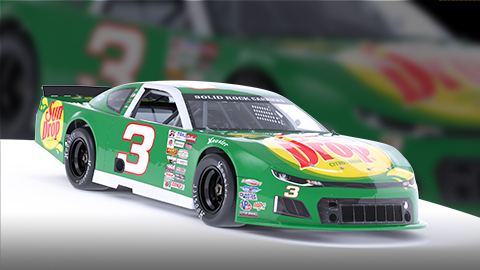
Image © iRacing.com Motorsport Simulations
Chassis
Power
Brakes
Bias Range
Adjustable
ABS
None
Downforce
Medium
Setup
Advanced
How the Late Model Stock Handles Braking
The Late Model Stock's braking system centers around the brake balance bar adjustment, which controls front-to-rear brake bias as a percentage of front braking force. Values above 50% send more pressure to the front brakes, while lower values shift pressure rearward. This adjustability serves dual purposes: preventing wheel lockups by moving pressure away from the locking axle, and fine-tuning handling balance under heavy braking. Higher brake bias typically induces understeer during braking, while lower values promote oversteer—critical considerations when setting up for different track characteristics.
The car's 2800 lb dry weight and asymmetric oval setup create unique braking dynamics. Weight transfer under braking is heavily influenced by nose weight percentage, which affects front grip availability during threshold braking. The truck arm mounting configuration plays a supporting role—higher truck arm mounts add anti-squat and reduce wheel hop under heavy braking, though they sacrifice rear grip. This relationship between suspension geometry and braking stability becomes especially important on tracks where heavy braking zones transition quickly into high-load corners.
Brake bias adjustment strategy should account for the car's changing balance through a fuel run, as fuel load directly affects nose weight percentage. Starting brake bias will need evaluation as the car lightens, since weight distribution shifts can turn a balanced setup into one prone to front or rear lockups. Monitor tire temperatures and wear patterns to confirm your brake bias isn't overworking one axle, and adjust shock settings to manage platform stability during the weight transfer phase of braking.
Stop Guessing, Start Improving
Many drivers slam the brakes with all their strength, but the fastest modulate pressure, use the brake to rotate the car, and exit as fast as possible. Train that skill here.
Train Anywhere, Anytime
Browser-based training works with any racing pedals or controllers. Fanatec, Thrustmaster, Logitech, Simucube — no installation required.
Pro-Designed Exercises
Access exercises created by professional sim racers like Suellio Almeida. Learn the exact braking patterns used by the fastest drivers.
Import Late Model Stock Telemetry
Drop your Garage61 lap CSV and extract braking data for every corner. Generate personalized practice exercises based on YOUR telemetry, not generic patterns.
Track Your Progress
View session history, performance trends, and best scores. Watch yourself improve over time and stay motivated to practice.
And There's Much More
Improve your braking technique with this car and much more:
Create Custom Exercises
Build from templates, draw brake curves, or record with your pedal
Schedule Your Training
Plan practice sessions and track your consistency across weeks
Brake Master Ratings
Earn rankings and compete on leaderboards as you improve
Exercises & Progress Tracking
Practice exercises and track your progress completely free.
No install needed • Works in browser
3 Essential Setup Tips
Tip 1
Brake Bias
Brake bias controls front/rear brake force distribution. Start with 56-58% front for most cars. Engine placement matters: front-engine cars need more front bias (58-62%), mid-engine cars run balanced (54-58%), rear-engine cars need less (50-54%). Understeering under braking? Add 1-2% front bias. Rear feels loose in braking zones? Reduce front bias by 1-2%.
Tip 2
Know Your Car
Check if your car has ABS, traction control, or brake mapping. ABS allows later braking but can increase stopping distance—adjust activation threshold in setup. High-downforce cars brake later and harder at speed but lose grip quickly as downforce bleeds off. Low-downforce cars require earlier, progressive braking with more trail-braking to rotate.
Tip 3
Quick Fixes
Locking fronts frequently? Reduce front bias 1-2% or brake earlier with gradual pressure. Car won't turn in under braking? Increase front bias 1% and practice trail-braking deeper into corners. Rear unstable in braking zones? Reduce rear bias or use smoother pedal release.
Master Your Braking
Common questions about braking in this car. Practice these techniques in our free app.
What's the best brake bias for the Late Model Stock?
What's the best brake bias for the Late Model Stock?
Does the Late Model Stock have ABS or traction control?
Does the Late Model Stock have ABS or traction control?
Why do my brakes lock up in the Late Model Stock?
Why do my brakes lock up in the Late Model Stock?
How late can I brake in the Late Model Stock compared to similar cars?
How late can I brake in the Late Model Stock compared to similar cars?
How can I practice braking in the Late Model Stock?
How can I practice braking in the Late Model Stock?
Explore MoreStock Car Cars
Similar cars you might be interested in learning
Ready to Master the Late Model Stock?
Put this knowledge into practice with Braking Lab's interactive brake training exercises. Import your telemetry and get personalized feedback.